Three uncomfortable activities that accelerate critical thinking for accounting students
by Jennifer Rose, University of Manchester, UK
Critical thinking remains one of the most sought-after graduate skills, yet accounting students often struggle to demonstrate it in their work. The challenge isn't just teaching critical thinking, it is creating the compassionate conditions where students can complete uncomfortable activities to develop intellectual maturity on the way to demonstrating deep critical thinking.
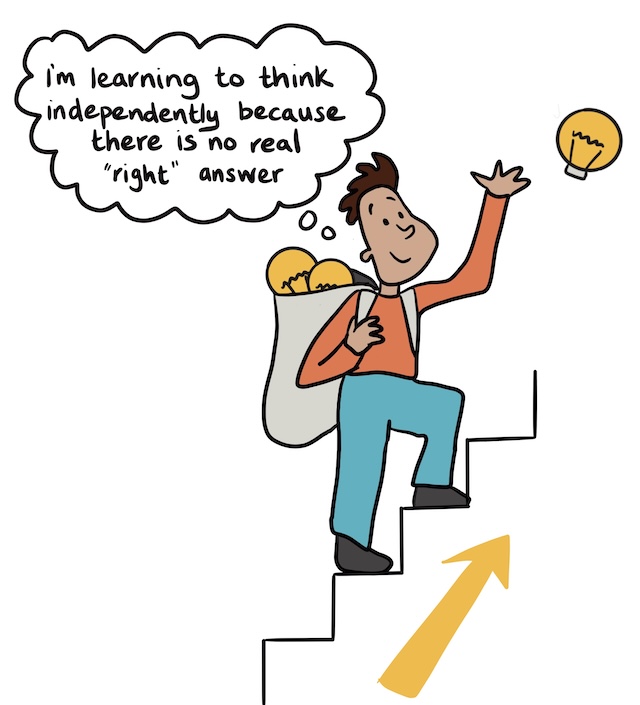
At the recent BAFA Accounting Education conference, a familiar frustration emerged of first-year students arriving focused on finding 'the right answer' for an assessment rather than developing judgement. This presents a fundamental problem. When students receive exact exam specifications and model answers, they miss out on developing the professional scepticism and comfort with uncertainty that graduates desperately need.
The developmental gap
The problem isn't that students lack ability. Rather, there's a developmental gap between where students are intellectually and where they need to be. Students typically start their degree viewing knowledge as something to memorise and reproduce. They want the 'right' way to approach assignments and look to lecturers or AI as the source of truth. Before students can demonstrate critical thinking, students need to progress through several developmental positions including appreciating that multiple perspectives exist, learning to weigh up evidence independently, and eventually becoming comfortable making contextual judgements. This progression creates discomfort, prompting students to seek correct answers from lecturers or accept AI generated answers without scepticism.
Activity 1: Self-feedback on exemplars
Instead of providing model answers, give first year students multiple exemplar essays that take different approaches to the same question. Working in groups, students explicitly write down observations about what made each essay effective, what strategies the writers used, and how the essays differ. Structured prompts, like those from David Nicol and Suzanne McCallum’s study, help make internal feedback explicit. In class, first-year students showed signs of developing intellectually in this task alone as they started to appreciate that there are multiple valid approaches and recognised that good essays can look different. While uncomfortable, this ignites curiosity. One student reflected that they were 'nervous for the new style of writing I haven't used before but fascinated by the different paths you can take when writing’.
Activity 2: Exposure to competing expert viewpoints
Invite professionals with different perspectives to present alternative approaches to the same problem. This exposes students to the reality that experts disagree on the 'best' approach. When students see respected experts taking different positions and defending them with evidence, they begin understanding that professional judgement involves weighing up competing considerations rather than finding the single correct answer. Intellectual development assessments confirm students realise they need to work out their own approach; exactly what is needed to enable critical thinking.
Activity 3: Starting with a blank page
Before showing exemplars, ask students to draft their own response on a blank page. This forces them to trust their existing knowledge and make decisions independently before seeing 'the answer'. Research with MBA students shows that those who wrote initial thoughts before seeing exemplars scored an average of 10 marks higher compared to those who went straight to the exemplar. More importantly, they showed much less reliance on the lecturer and greater confidence in their own judgement. The blank page creates discomfort, but this discomfort drives intellectual development. Students start appreciating that uncertainty is inherent in knowledge itself, a key realisation needed for intellectual development which increases their ability to think critically.
Implications for Accounting Education
However, the real challenge isn't just knowing what activities work; it is creating compassionate teaching environments that hold space for student discomfort. Students feel uncertain comparing exemplars, confused when experts disagree and anxious facing blank pages. The educator’s role is to acknowledge this discomfort whilst helping students understand it signals development, not failure. Are you willing to prioritise intellectual development even when satisfaction scores may dip and students feel uncomfortable? What strategies have worked in your context to help students move beyond answer-seeking behaviour? Enabling accounting graduates to think critically and exercise professional scepticism is worth the discomfort; both theirs and ours.